4 Main Areas of Development of a Top-Level Player

Players and parents need a map of the modern development path: technical work, physical work, emotional conditioning, and match knowledge - plus the environment that makes all four grow.
The four pillars
1. Technique
Excellent technique allows simplicity, accuracy, and reliability. It is a never-ending journey of refinement.
Technique alone cannot win matches. Decisions on placement, the ability to hit targets when tired, and emotional control under pressure are what win at the highest level. Improve technique while growing placement knowledge and emotional control alongside it.
A big selection of shots means more variety and more ways to disable ambitious opponents. Aim for complete players - technically sound and multi-skilled.
2. Physical development
The game is as physical as ever. Flexibility, core power, ball-recognition speed, hand-eye speed, and heart-lung capacity all live here. Consistent S&C is not optional for serious competitors.
3. Emotional development and conditioning
This ultimately decides the athlete’s future. Skills to hone include:
- Discipline - body control in the shot, sleep, nutrition, thought filtering (Discipline)
- Perseverance - gratification can take a long time; frustration and failure are part of the process
- Problem solving (Learned Helplessness)
- Decision making and leadership (Leadership)
- Toughness - relentless, unshakable determination
- Energy and positivity - self-motivation that turns into physical output and higher daily productivity
4. Knowledge: the “how to” of experience
Examples:
- How to win when your forehand is completely off
- How to beat a counterpuncher
- How to cycle training to peak
- How to build emotionally on a flat day
- How to handle jet lag and hydration
- How to use an opponent’s emotions against them
This know-how is the culmination of skill. The ultimate compliment: “This player really knows how to win."
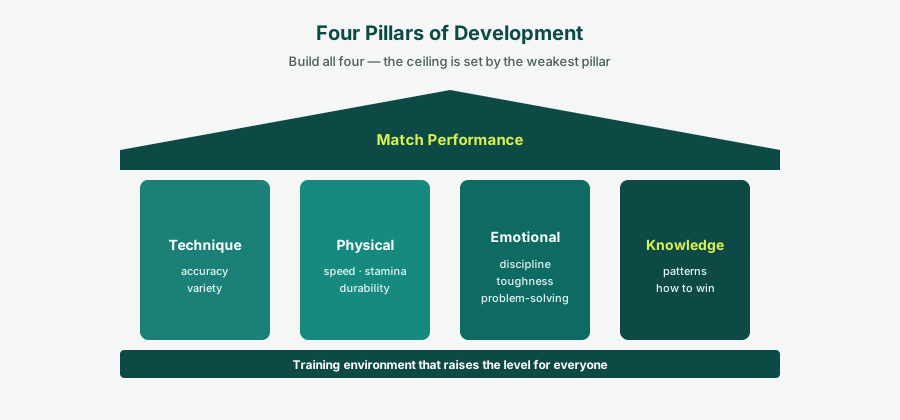
The ideal practice environment
The biggest secret is the training environment. From training in France and Spain, and from cultures known for dogged athletes: the silent promise that everyone trains for the whole.
If I make 50 balls and the other player makes 50, we raise each other. If I hit a winner every second shot, they get grumpy and sulk - nobody improves.
If you aspire to top 100, you need a skill level a little above the current #100. Otherwise you are 101 and they keep the spot. Training is accumulation of skill - not who wins the day, but how high the level goes. Leadership by example is required.
Key takeaway: Technique, physical tools, emotional conditioning, and competitive knowledge - grown inside a culture that raises the level for everyone - is the development map.
Continue with Overview of Modern Tennis and Developing a Top-Level Player.