Aggressive Baseliner
Understanding Game Styles

We are going to take a tactical journey through the most important game styles - what each style relies on to succeed, and how it matches up against the others.
The Aggressive Baseliner
Aggressive baseliners tend to hit the serve a little bigger, in an attempt to create free points and short balls where they can use their dominant forehand. They are seeking an effective serve-plus-one.
They like to start every point in control of the middle of the court. Novak Djokovic and Victoria Azarenka are excellent role models for this style: first-strike intent from the baseline, without giving away the consistency that wins long matches.
Characteristics
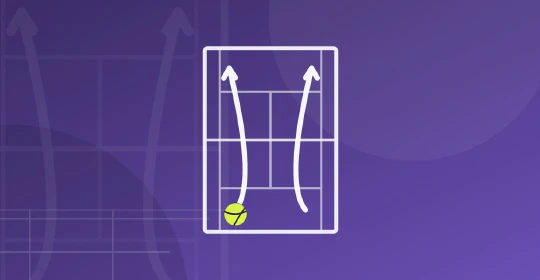
- Serve wide, first ball to the open court
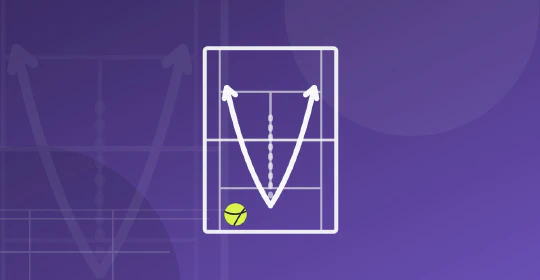
- Serve T, first ball back behind
- Serve T, first ball angle
- Uses the forehand to dictate points
- Covers two-thirds of the court or more with the forehand
- Looks to take ground and take time whenever possible
- Able to give ground when necessary
- Likes to play when holding a lead
- Very solid backhand with the ability to mix in an effective slice
Tactical patterns
Able to take the cross-court rally ball and change direction down the line with different spins and heights, with excellent control.
- Multiple forehands inside-out to set up the forehand inside-in or backhand down the line
- Aggressive backhand cross-court to set up the forehand inside-in
- Takes time away by driving the backhand down the line to set up the forehand inside-out / inside-in finish
- Starts the point with an aggressive middle ball that pushes the opponent back, then takes the shorter ball to either side
- Serve wide, first ball to the open court
- Serve plus forehand
- Serve T, first ball behind
Identity check: If your default answer to a neutral ball is "attack with the forehand and take time," you are living in this style - even if you still spend most of the match at the baseline.
How this style wins (and loses)
Wins when:
- First-serve percentage stays high enough to set up the plus-one
- Forehand patterns create short balls before the opponent does
- Depth and court position keep the opponent defending
Loses when:
- The opponent steals time and rhythm (low slices, high-heavy balls, tempo changes)
- Over-aggression on neutral balls produces free errors
- Movement is late, so the “weapon” becomes a rescue shot
Practice ideas
- Serve + 1 only: first serve to a target, plus one forehand to a corner. Restart on any ball that is not a genuine plus-one opportunity.
- Inside-out ladder: three cross-court forehands, then inside-in finish - build the pattern, not just the winner.
- Change-of-direction reps: cross-court rally, change down the line only after a quality ball (depth past the service line).
- Lead management: play sets where you must close games with first-strike patterns when ahead 40-15 or 40-30.
Match-up notes
| Opponent style | Aggressive baseliner approach |
|---|---|
| Counterpuncher | Avoid matching endless pace; use short angles, variety, and selective net approaches - see How to Beat a Counterpuncher |
| All-court player | Protect second serve; expect them to attack your short ball and mix slice |
| Serve-and-volley | Return deep through the middle; pass with margin; make them volley up |
For the other side of this matchup, read How to Beat an Aggressive Baseliner.
Key takeaway: The aggressive baseliner is not "hit hard and hope." It is a first-strike system built on serve patterns, a dominant forehand, and the discipline to take time when the ball allows it.