Backhand Slice
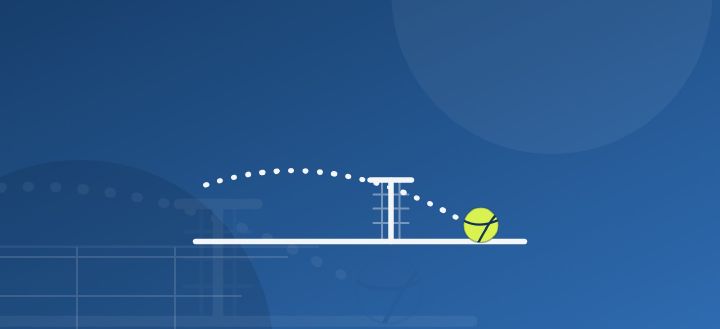
One of my absolute favorite shots: the backhand slice.
In a topspin-heavy modern game, the slice is still a high-value tool. It changes height and pace, buys time on defense, keeps the ball out of an opponent’s strike zone, and sets up the next ball when you chip short then go deep behind them.
Why the slice still wins points
- Low skidding balls force awkward contact, especially on faster courts
- Neutralizing pace when you are stretched wide
- Approach shots that stay low as you move forward
- Pattern play: short slice to the backhand, then heavy deep to the open court
- Variety that breaks an aggressive baseliner’s rhythm
I must admit that I prepare a little differently for the lower backhand slice, preferring not to make such a high take-back - but it is very difficult to argue with Federer. Use his model as the gold standard for shape, balance, and touch; then adapt the take-back height to the ball you are actually receiving.
Keys to a usable slice
- Continental (or close) grip so the racket face can stay stable through a high-to-low path
- Early preparation - shoulder turn first, then the cut
- Racket face slightly open, moving high to low through the back of the ball
- Firm wrist through contact, soft hands after - control without stabbing
- Finish that matches intent: long and deep for a defensive float; more abbreviated and “under” for a short skidder
Two slices, two jobs. A deep slice is a reset. A short, low slice is a pattern shot. Practice them as different skills with different targets, not as one vague "chip."
Practice ideas
- Cross-court slice to a cone past the service line (depth first)
- Short-angle slice that lands in the service box and dies
- Slice approach + first volley (link to net skills)
- Pattern: two deep topspin cross-courts, one short slice, one deep ball behind
Watch the master
Federer in slow motion - study the unit turn, the face control, and how quiet his head stays through contact:
Key takeaway: The slice is not a "weak" backhand. Used on purpose, it is a tactical weapon that changes the geometry and tempo of the point.
For the topspin two-hander foundation, see Backhand and Backhand Technique.