Changing Direction
Five laws for going down the line
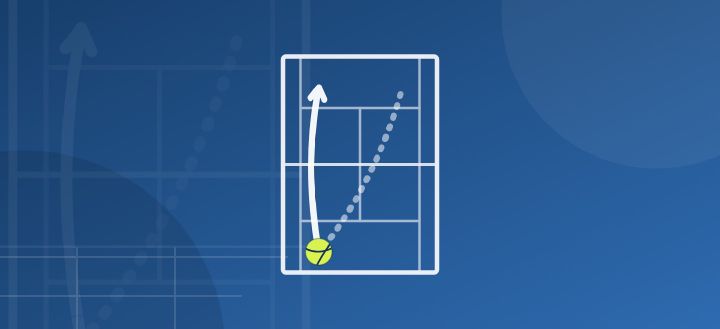
Five laws for changing direction and going down the line.
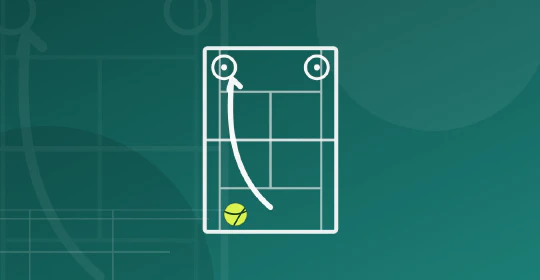
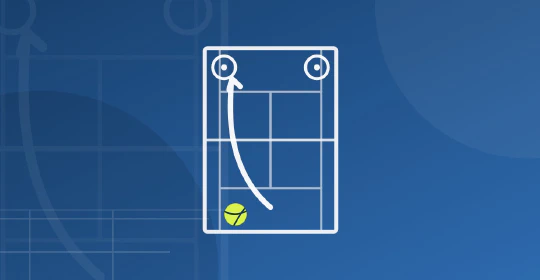
It is important to realize that going down the line off a cross-court ball is a risky proposition. There are two main reasons:
- Contact geometry. Changing the angle of the ball off the strings means you can catch it a little late and miss your target.
- Court position risk. If your opponent answers your down-the-line ball with another good cross-court, they can seriously damage your court position - pulling you wide of the alley.
Since we cannot play cross-court forever, we need clear rules for when the change is worth the risk.
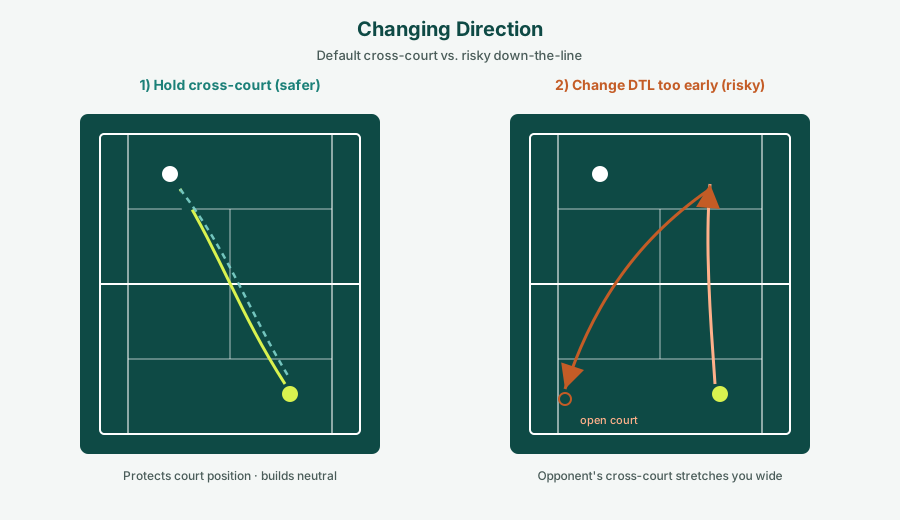
The five laws
-
Is it a shorter cross-court ball? A shorter ball lets you step in and take time away from the opponent’s recovery.
-
Different spin? A high loopy ball or a low slice both give you more time to protect court space after the change.
-
Bringing the opponent into the net. A wonderful tactic off the cross-court ball: a drop shot or short slice to see if they take the bait - then pass or lob (especially to the backhand).
-
On balance and in the strike zone. Feet set, weight transferring forward, favorite contact point - then you can rip the big one with conviction.
-
Different contact point. If you are skilled at taking the ball on the rise (think Agassi), this is a great way to attack while removing time. Be advised: it is not easy, and it needs a lot of practice to become reliable.
Default rule: when in doubt, stay cross-court and improve the quality of the neutral ball. Changing direction is a decision, not a habit.
Practice ideas
- Permission drill: cross-court only until a ball lands short - then you must change down the line
- Spin change: two cross-courts topspin, one down-the-line slice, recover
- On-the-rise ladder: feeds progressively earlier; target is a large down-the-line box, not the chalk
- Live score: lose the point automatically if you change direction off a deep, defensive contact
Key takeaway: Down-the-line is high reward only when the ball, your balance, or your spin choice protects you. Otherwise, the open-court answer is waiting.
I hope these tips help you be thoughtful and effective when changing direction. Pair this with Phase Play: Offensive & Defensive for the full court-position picture.