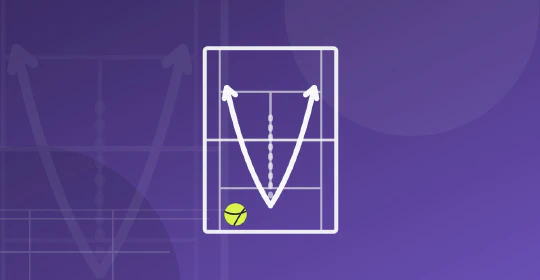
Chip and Charge
Understanding Game Styles
We are going to take a tactical journey through the most important game styles - what each style relies on, and how it matches up against the others.
Chip and charge / hit and charge
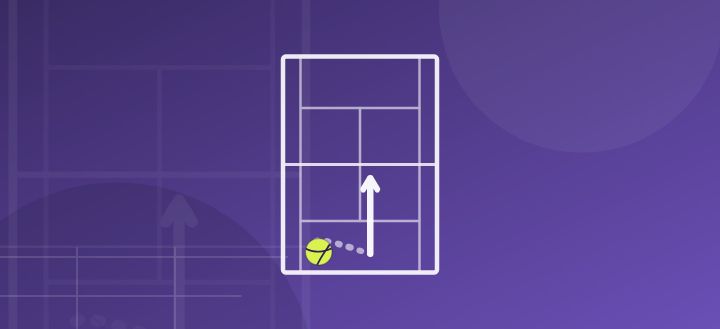
Chip and charge is a return tactic: the returner chips or slices the return and follows it to the net.
We do not see pure chip-and-charge specialists as often today. With the evolution of racquets, many serves are simply too big to attack this way on every point.
That said, the tactic is still excellent as a change-up - in singles and especially in doubles - when the serve is manageable and you want to steal time.
Learning it takes practice, commitment, and confidence. If the serve is too big, it may not be the right day for a full-time diet of chip-and-charge - but even one or two well-timed charges can plant doubt.
Players who used it brilliantly include Jimmy Connors and Tim Henman.
Characteristics
- Strong slice backhand
- Puts instant pressure on the server to produce a passing shot
- Great at taking time away
- Takes the ball early with strong racket skills - controlling different speeds and spins
- Compact swings and good on-the-rise skills
- Good timing on the split step and loading on the outside leg, allowing a strong first step toward the net
Tactical patterns
- Deuce court: take a kick serve down the T and aggressively return down the line or through the middle
- Drive the forehand or backhand to the opponent’s backhand corner and attack
- Deuce side: run around the forehand, hit down the line, and attack
- Ad side: chip down the line and charge
- Ad side: forehand inside-out to the backhand and attack
Quality of the chip matters more than the charge. A high, floaty chip is an invitation to be passed. A low, skidding chip that lands deep enough to jam the server is what buys you the first volley.
Practice ideas
- Chip to targets, no charge - own the slice shape first
- Chip + three closing steps + split - without a volley, just footwork
- Chip + first volley deep through the middle
- Doubles only: chip down the line / at the server’s feet on second serves
- Score games: you may only break when you chip-and-charge at least once in the game
Watch Connors apply pressure
Connors was not always a pure hit-and-charge player, but in this match against Agassi he uses it as a primary tactic - fun and instructive. We also have players working on a more compact backhand, flattening it out and taking the ball early. Here you can learn from a master doing it brilliantly.
P.S. Connors is the “old guy” - and still teaching lessons.
Key takeaway: Chip-and-charge is rarer as a full identity, but as a selective weapon it still steals free points - if the chip stays low and the feet commit early.
Related net-pressure reading: Serve and Volley Player and Backhand Slice.