Counter Puncher
Understanding Game Styles

We are going to take a tactical journey through the most important game styles - what each style relies on to succeed, and how it matches up against the others.
The Counter Puncher
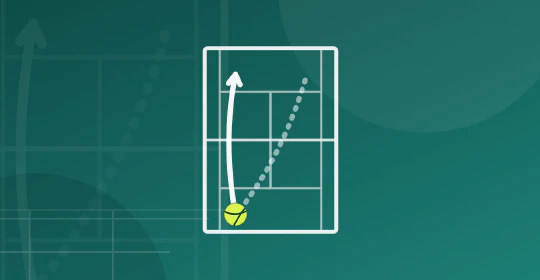
Counterpunchers hit their targets with a high percentage of first serves. They develop good enough serves to start the point in a neutral position, tending to use a solid three-quarter-speed first serve in order to keep percentage high. They also like width, and are strong with the softer slice out wide.
Gilles Simon and Caroline Wozniacki are great modern examples: not always the biggest hitters, but relentless at absorbing pace, redirecting, and making aggressive players play one more ball.
This style is often misunderstood as “passive.” At its best, it is active defense - controlling height, depth, and tempo until the opponent’s aggression cracks.
Characteristics
- Very consistent from the baseline; solid from both sides
- Great mover on the court, especially in a defensive position
- Excellent anticipation
- Redirects pace well
- Absorbs power well
- Changes pace very well to throw off an aggressive player’s rhythm
- Has effective passing shots and an excellent offensive and defensive lob
Tactical patterns
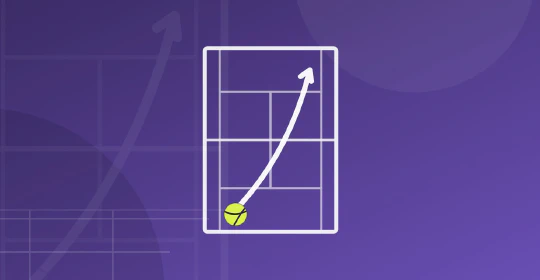
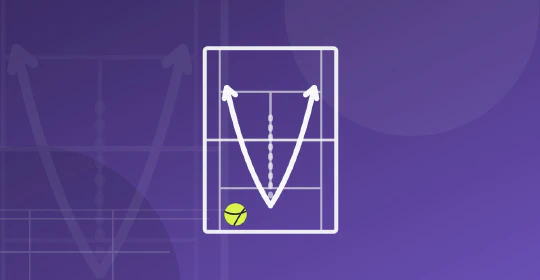
- Half-X: short angle, deep cross-court; deep cross-court, short angle
- Keeps the ball deep and moves the opponent from side to side
- Serve into the body, first ball high and heavy, trying to push the opponent off the baseline
- Slices the backhand shorter in the court, then heavy back behind them
- Keeps the opponent off balance
- Keeps the ball low in zone 1, high in zone 3 (high to the backhand especially)
Half-X in plain language: combine a short angle that pulls the opponent wide with a deep ball that pushes them back. You are stretching the court in two dimensions - side-to-side and front-to-back.
How this style wins (and loses)
Wins when:
- Depth and consistency force the opponent into low-percentage overhits
- Pace changes disrupt the aggressor’s timing
- Passing and lob quality punish opponents who rush the net
Loses when:
- The counterpuncher becomes purely reactive and never creates a short ball of their own
- First-serve percentage drops and every return starts on defense
- Against elite power, they get pinned and cannot change the geometry of the rally
Practice ideas
- Depth games: only balls landing past the service line count as “in” during cross-court exchanges.
- Absorb and redirect: partner hits hard; your job is soft hands, deep target, no panic.
- Half-X pattern drill: alternate short-angle / deep-cross on purpose for 10-ball sequences.
- Defense-to-offense: start each point from a wide defensive feed; goal is to neutralize, then step in on the first short ball.
- Lob + pass series: one player at net, counterpuncher practices disguise between pass and lob.
Match-up notes
| Opponent style | Counterpuncher approach |
|---|---|
| Aggressive baseliner | Slow the match, remove strike-zone balls, patience first - see How to Beat an Aggressive Baseliner |
| All-court player | Expect variety; hold depth; do not gift short floaters |
| Serve-and-volley | Return deep through the middle; pass with margin; use the lob early so they respect it |
If you are the aggressor trying to break this style down, read How to Beat a Counterpuncher.
Key takeaway: Counterpunching is not waiting to lose. It is winning the neutral phase so consistently that the opponent is the one who has to take the dangerous risk.