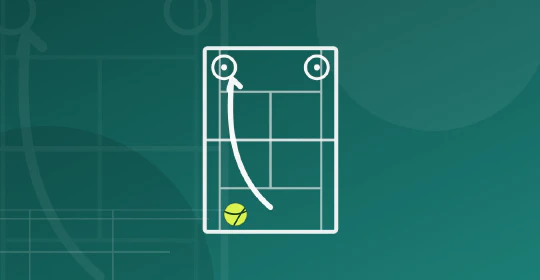
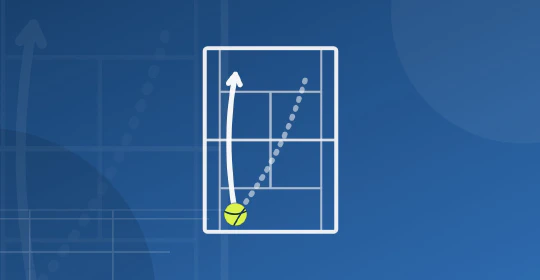
Phase Play: Neutral
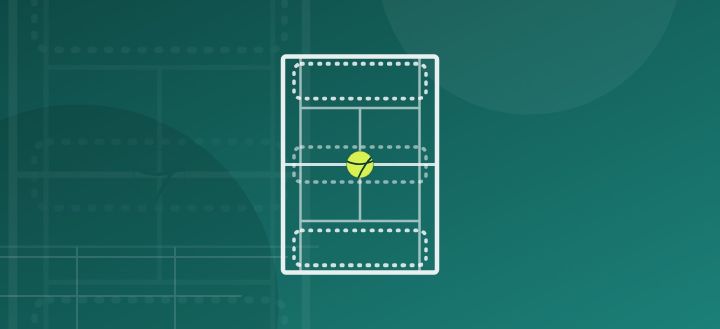
We are going to discuss some simple judgement errors that are common even among the pros - and far more common as we go down from 7.0 to 2.5 on the USTA scale.
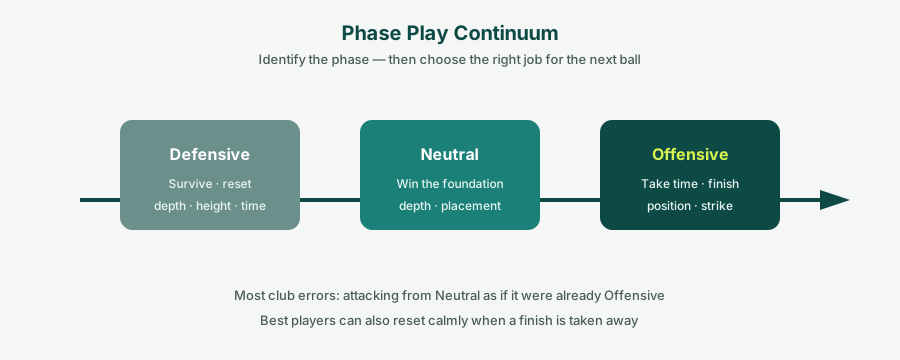
Tennis can be described very simply in terms of three phases: offensive, neutral, and defensive.
We will start with the neutral phase, because it is the foundation of the tennis game.
Why neutral decides matches
In simple terms, the person who wins the neutral phase will be the first to cause an error - or to force a short ball - and therefore create the chance to move up into the offensive phase.
Over the course of 20 or more points, the player who more consistently wins neutral exchanges and earns the right to transition will have the greater probability of winning the match.
Simple scoreboard for practice: after each rally, ask "Who won neutral?" not only "Who won the point?" You will start seeing patterns in your own impatience.
Tools for a superior neutral phase
- Consistency
- Depth
- Accuracy
- Placement
- Good court positioning and understanding of court space
- Good use of zone 1 (low) and zone 3 (high) balls
- Ability to absorb pace with accuracy
- Excellent split-step timing
- Reaction time
- A better cross-court ball than the opponent’s
Common neutral-phase errors
- Trying to finish too early - turning a neutral ball into a low-percentage winner
- Floating short - the ball that “feels safe” but sits up in the strike zone
- Ignoring height - only one shape of ball, so the opponent grooves timing
- Poor recovery - winning one ball, then starting the next one out of position
- Changing direction from a defensive contact - gifting the open court
How to train it
Training the neutral phase is critical for good point construction.
- Cross-court only games to 11, with a depth rule (must land past the service line)
- Absorb-and-deep: partner hits hard; your only job is deep, high-margin replies
- Height ladder: three low (zone 1), three heavy-high (zone 3), then open rally
- Neutral until short: neither player may attack until a ball lands short of the service line
Patience and excellent mental training are required to stay in the neutral phase. Encourage yourself to stay there as long as possible - there is a great deal to learn about your opponent’s preferences when you stop rushing.
When you practice, ask: how many neutral phases am I winning?
Key takeaway: Offense is a privilege earned by winning neutral. Build the tools - depth, height variety, absorption, court position - before you chase highlight finishes.
Have fun thinking about this - and continue with Phase Play: Offensive & Defensive.