Serve and Volley Player
Understanding Game Styles

We are going to take a tactical journey through the most important game styles - what each style relies on to succeed, and how it matches up against the others.
The Serve and Volley Player
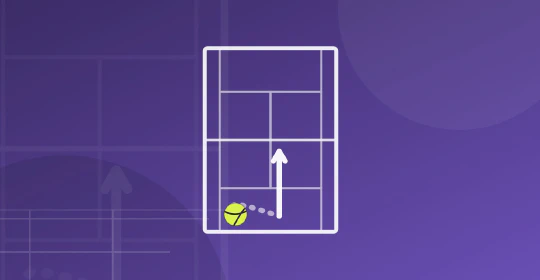
To become a successful serve-and-volley player, you must be tough and extremely quick. You do not need to concentrate for endless baseline rallies - but you must have a good serve, think quickly, and finish points fast.
In today’s game we do not see pure serve-and-volley players that often. With the evolution of racquets, the speed of serves and returns, and the physical strength of modern players, living at the net on every point is a hard life.
That does not mean the skills are obsolete. The best modern players still steal free points with the occasional serve-and-volley, especially on grass, indoors, or on big points.
Perfect historical examples: Patrick Rafter, Stefan Edberg, and - most successful of all - Pete Sampras. In a more recent era, Radek Stepanek was a good example of someone who still brought net pressure as a real identity.
Characteristics
- More comfortable in the front court, finishing points off at the net
- Looks to put instant pressure on the opponent’s return
- Hits targets on the serve very well, and volleys to the appropriate spot on the court
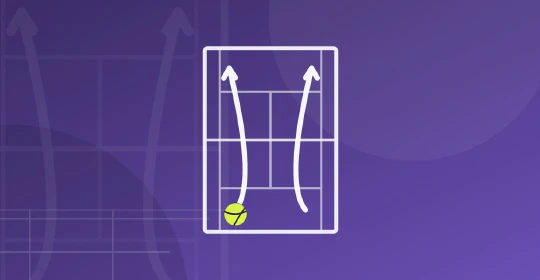
- Serve T, first volley behind
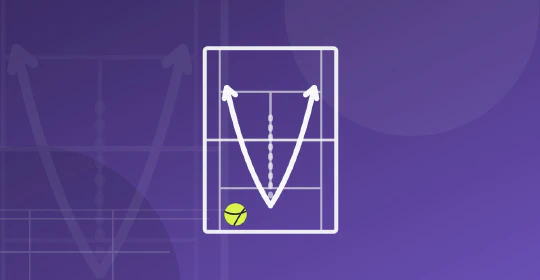
- Serve wide, volley to the open court
- Serve body, volley short angle, cover the line
- Plays the match on their terms and at their rhythm
Tactical patterns
- Serve wide, first ball to the open court
- Serve T, first volley behind
- First volley deep, second volley short
- First volley to the weaker side
- Defensive volleys: keep them deep and in front of you
- Volleys deep through the middle to take away the angle on passing shots
First volley mindset: most points are won or lost on the quality of the first volley, not the highlight-reel putaway. Deep through the middle buys you the second volley; short and cute too early gifts the pass.
How this style wins (and loses)
Wins when:
- Serve location forces a weak return (body, wide stretch, or T jam)
- First volley is deep and disciplined
- The player accepts that some days the returner is too good - and still mixes net pressure enough to plant doubt
Loses when:
- They follow in on poor serves
- First volleys float short and sit up
- Footwork to the net is late, so every volley is a lunge
Practice ideas
- Serve location + first volley only: ignore winners; grade the first volley depth.
- Body-serve series: serve into the body, volley short angle, recover to cover the line.
- Two-volley finish: coach feeds a return; you must play first volley deep, second volley to a target.
- Modern hybrid: play sets where you S&V only on 30-0, 40-0, 40-15, and second-serve returns of weak second serves.
- Chip-and-charge link: train the same closing skills from the return side - see Chip and Charge.
Watch: Sampras pressure at net
Watch how serve location and first-volley discipline create continuous pressure:
Also useful historical film already on the site style of play:
Key takeaway: Pure serve-and-volley may be rare, but net pressure is timeless. Location on the serve, courage to close, and a disciplined first volley still win free points - if you train them on purpose.